Want to sew with your kids? Fantastic idea! Really. Kids, both younger and older, love sewing. If you haven’t discovered this yet, you will…as soon as your kids start to sew.
I’m often asked questions like “How do you teach a 5 year old to sew?” or “What is a good beginner sewing project?” or “What is the best sewing project for a child?” So…. how do we identify the best sewing project for our kids? And how do we identify a project that’s suitable, that’s not going to frustrate our kids (and us). And it’s often the most important question that parents and teachers, who are introducing their kids to sewing, face.
As a sewing teacher and a softie designer, it’s a question I have thought about for many decades. I really do spend my spare hours pondering what makes a project easy for kids to sew by themselves and still look amazing? Or what sort of project allows our kids to learn sewing skills and still be stress free? Or what sort of project allows them to discover how creative and fun sewing can be? In short, what does the best sort of project to introduce kids to sewing look like?
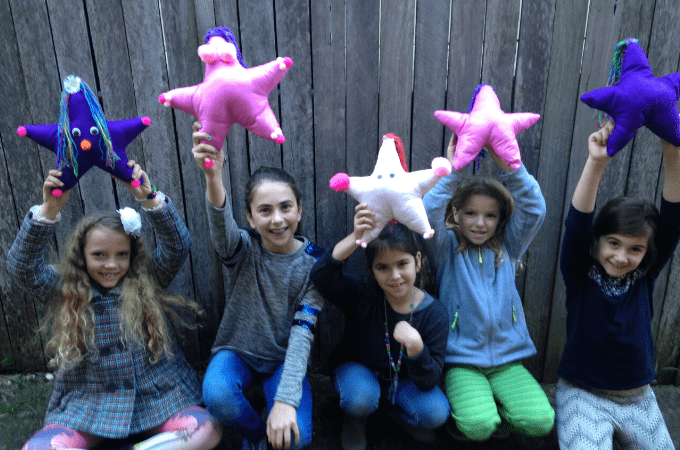
Here’s a quick guide to help you work out what is the best sewing project for kids.
It has to be simple
Choose or create a project that doesn’t have too many pieces to cut out, attach, insert or sew into place. More pieces mean a more fiddly, more complicated project. And this in turn means that your kid’s first sewing experience can turn into a fairly demanding, and potentially frustrating, one.
It has to be a quick sew
Can the project be finished in a single sitting? When kids start to sew, it’s good if the project they’re making is one they can finish within a fairly short time. Kids can and will work for hours on something that absorbs their attention but having said that, I think it’s best, especially for a first project, to be aware that there’s often a time limit when kids are working. If a project drags on too long they can lose their enthusiasm and interest. On the other hand, it’s very satisfying for kids to see how quickly they can sew something that looks amazing. They are just so proud. It’s as if they suddenly realised their powers. You can almost see their self-confidence kindle itself and start to glow.
Start off with a running stitch
I like starting kids off with a running stitch. It’s a fairly easy stitch for most kids to get the hang of and I’ve found that a lot of kids like mastering the motion of dipping the needle into the fabric and pulling it through. It’s also a fairly quick stitch that enables kids to finish their project more quickly than say, a blanket stitch or a backstitch. But remember, you need to get your kids dipping their needle into the fabric and pulling it through in a down-and-up motion without pulling their needle and thread right through to the back of the fabric. Thinking that you have to pull the needle and thread right through is a common mistake for beginners and it makes sewing a much more laborious and time consuming activity.
Straight lines are better than curvy ones
If your kids are sewing for the first time it’s helpful to draw a sewing line for them to sew on about 1/4″ in from the edge of the fabric. And it’s going to be easier for them to keep their stitches, which are probably fairly big and uncontrolled (at least at first) on a straight sewing line than it is to stitch along one that curves back and forth and is always charging off in new directions. A gently curving line is just as good as a straight one but try to avoid projects with too many ins and outs.
Choose a fabric that’s soft to sew
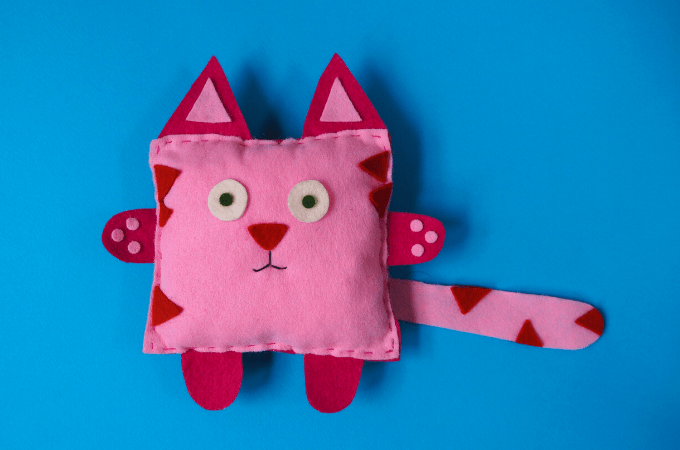
I think felt is a great choice for a first sewing project but cotton fabrics work well too. Both fabrics are usually soft to the touch, which makes them nice to hold, and also makes them easy for young hands to push and pull a needle and thread through. I personally like felt and tend to use felts with kids as they don’t fray and therefore, don’t need to be turned right side out. And they also allow you to cut out clear shapes with clean edges and are great to fringe.
Go with your child’s intuition
Having said the above, my sixth and last point is: go with your child’s intuition. If they have their heart set on a particular project, even if you think it’s too difficult, it’s probably best to throw away all the preceding advice and just try it. Explain to your child that it might be a bit tricky to sew, but see how they go. When kids really want to do something, they almost always surprise us with just how much they can achieve.
And if it is too difficult for them to sew, you can still do the project together or put it aside for a later time and look for something more suitable.
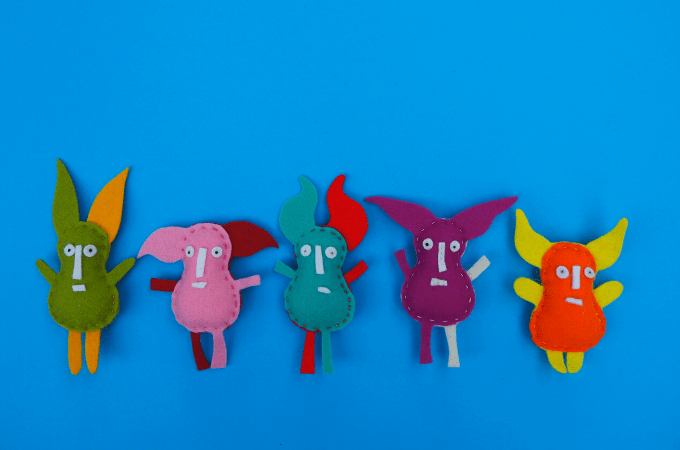
So what’s my favourite first sewing project for kids?
At the beginning of this piece I mentioned that I’ve spent many hours thinking about what makes a sewing project good for kids to begin with. Well, I also decided to design a softie project that would tick all the right boxes. I called these zenkis. So if you ask me, what’s my my favourite project to introduce kids to sewing it has to be one of my zenkis.
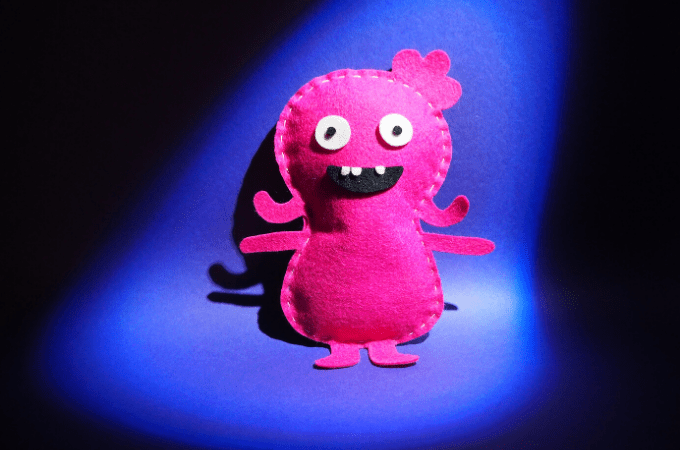
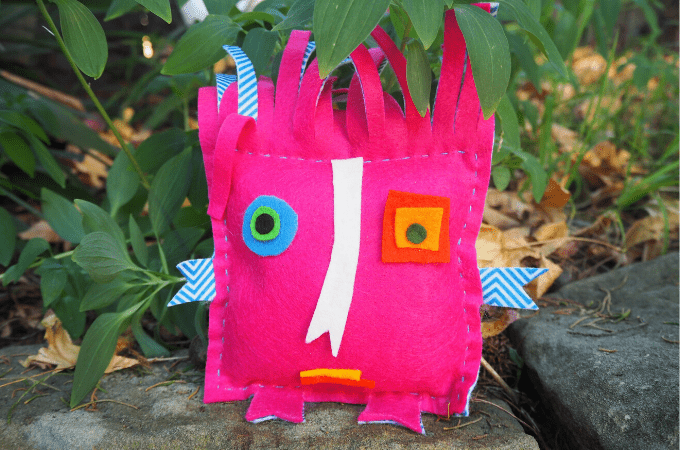
They can be made from only two pieces of felt and a running stitch. They don’t require you to insert and pin bits into place, they take very little time for a young first-time sewer to complete…and just as important for kids, their creative possibilities are endless. No two zenkis ever end up looking exactly the same. Yep, zenkis are my go-to choice for an introductory sewing project. I think they’re the friendliest simplest softies in the universe (even though I have to admit that I’m prejudiced…and they’d be very upset with me if I said anything else).
I hope these guidelines help you to create or choose a fantastic first project for your kids that becomes their first step in a long, fun-filled and creative sewing adventure. Keep yourselves well, Trixi.
I took notes on one of your videos sometime past that you have tips for working with cotton that is floppy. Could I please get that video and tips? Thank you!